My Story with the Motorola HC05
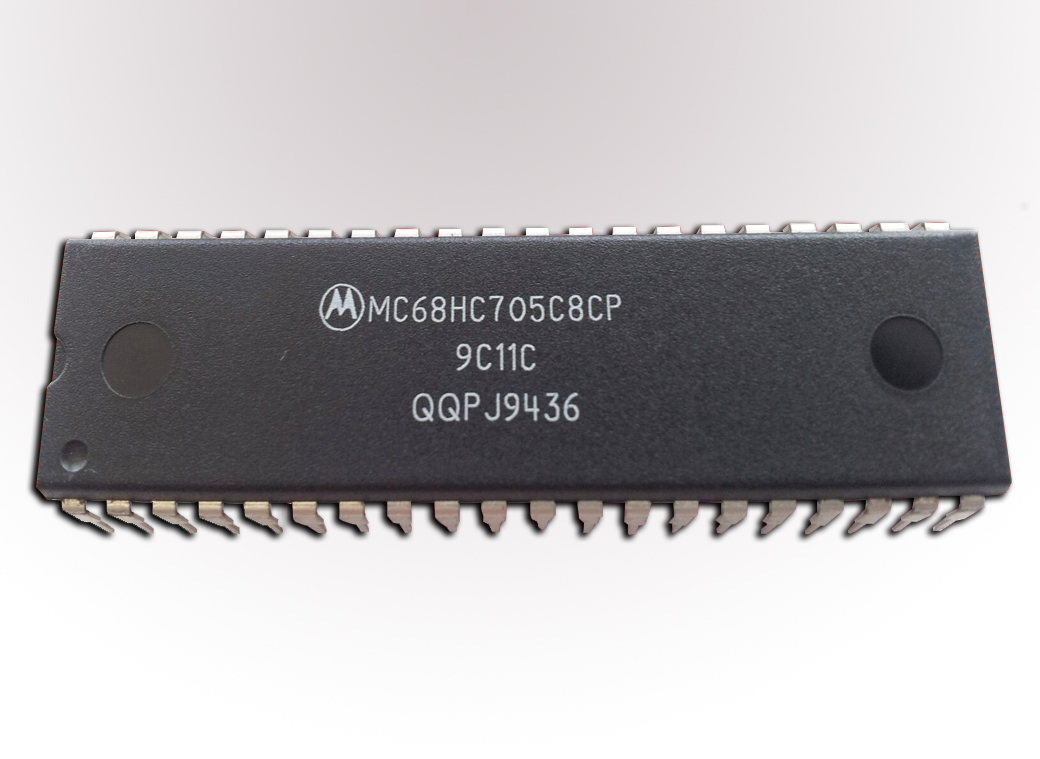
How it started
In April 1991 I was given a vehicle security control unit salvaged from a vehicle. At this time, one company dominated the vehicle security market in SA: That company was CONLOG. During most of the 1980s, car theft was a major issue in SA, and most people were required to have vehicle security installed aftermarket, for insurance reasons.
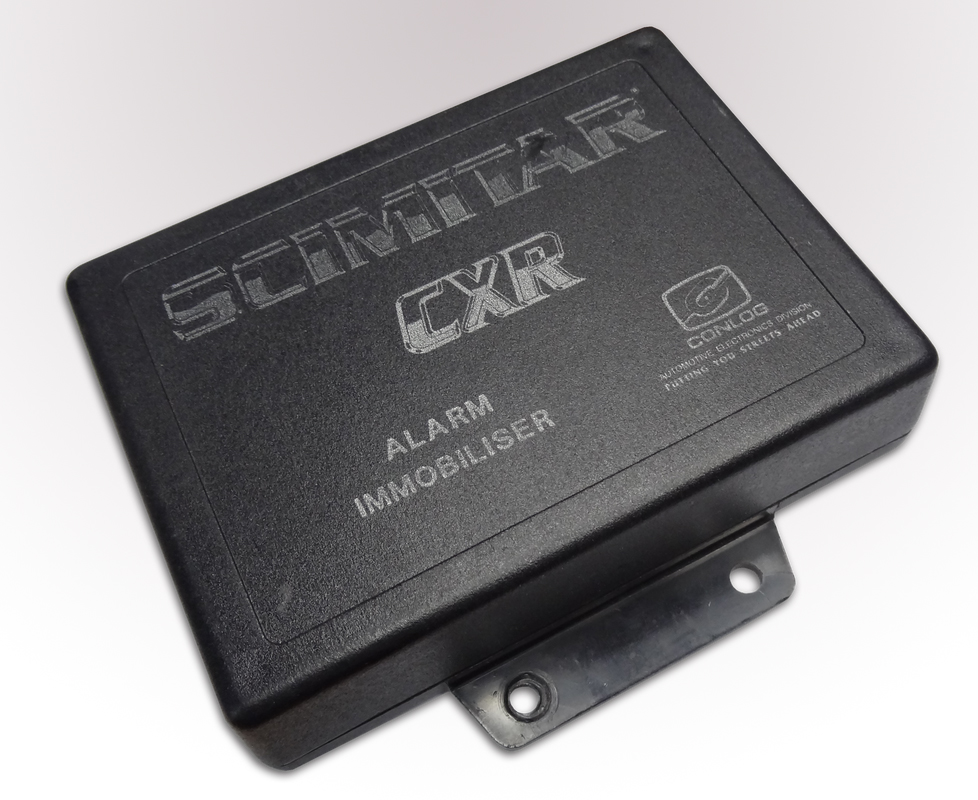
The unit I was given, was not marked, but, it was in the same enclosure as CONLOG's other consumer security products, their SCIMITAR RXi and CXR systems. Below is a photograph of a unit I had at one time:
What was inside?
At the time, digital cameras did not exist, and I most certainly did not have any access to photography, so all I can do henceforth is describe it as best as I can:
Inside, was a piggyback board, which I already identified as an RF receiver. There were some automotive PCB mount relays, a CMB-12 buzzer (STAR), a small 8-pin IC and then of course the 40 pin DIP IC with the Motorola logo on it. I completely disassembled the PCB, and carefully stored all the parts, because the quality was great and at the time, components, especially clean and new ones were not in plentiful supply (grew up in poverty). One of the components from this unit I still have today: the serial EEPROM. It is pictured below, along with an assortment of other components that was found inside that box:

93C46 Serial EEPROM

Quality Roederstein capacitor

ULN2803A Octal Driver
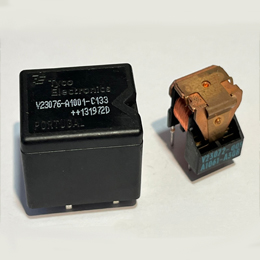
PCB mount Auto Relays
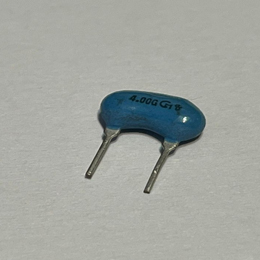
4MHz Ceramic Resonator (MURATA)
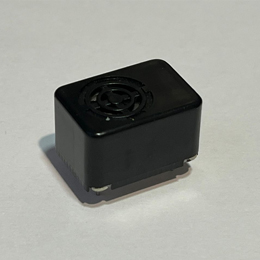
STAR CMB-12 PCB Buzzer
What happened next
The majority of these parts, except for the EEPROM were used to build other projects. Some of the parts were foreign to me, I didn't know what a ceramic resonator was or what it was used for, but, a certain catalogue educated me well, along with the few issues of Elektor I was able to borrow from a school friend. In 1991 there was no such thing as the internet so the serial EEPROM would remain a mystery to me until later.
In 1992, Maplin Electronic Supplies in the UK decided to expand to South Africa and in November that year they distributed the then current UK catalogue via the now defunct newsagent, CNA. It was packaged (with a pricelist in ZAR), and Maplin opened the first branch of "Maplin South Africa" in the Western Cape.
Maplin's catalogue by then was already widely regarded as a "must-have" databook, since Maplin would publish datasheets for most of the parts they sold in the catalogue. In those days, if you were not in the industry as an engineer with FAEs from distributors calling on you, getting this sort of information was challenging. The internet changed all of that of course. In that 1991-1992 Maplin catalogue (pictured below), I found the condensed datasheet for Microchip's 93C46 EEPROM and rightly concluded that the device from the CONLOG unit was a serial EEPROM. The Maplin catalogue helped me identify pin-outs and functions of nearly all the other parts inside the CONLOG box. Amazing how far a little information can go...

And then?
With the help of the Maplin catalogue, and Elektor, I was able to realize that the HC05 inside that box was not a custom chip, but a microcontroller. By 1993 as I was finishing school, I had been reading up about another popular microcontroller, the Intel 8031. Given that any info about the HC05 was difficult to obtain, and would remain so until I got the internet in 1997, I moved on had great success with the 8031 and had done amazing things with it, so I didn't bother with the HC05 until decades later, circumstances aligned:
- I discovered that MANTECH ELECTRONICS was sitting on lots of stock of HC05 OTP microcontrollers.
- I met Phil Pemberton on Mastodon; I was encouraged to hang out there by way of his website and his key project, the HC05 glitcher
Before I left school, I received more of those CONLOG boxes, at least five of them as far as memory serves, and some of them I managed to get working. One of them I completely reverse-engineered and I breadboarded the circuit, just because I could. It was an exciting time, because it was super cool to have this little brain running, being an alarm according to it's programming. Far nicer than playing with boring old transistors. Those feelings stay with you.
However when I found a large quantity of NOS (new-old-stock) HC05 microcontrollers at one of my suppliers in 2023, my thinking changed, and I then began to put some effort into revisiting this relic from long ago... How hard could it be? As it would turn out, difficult but not impossible. Besides, back in the 90s it would have been an insurmountable challenge for me anyway due to lack of experience and knowledge I didn't have at the time
Discovering a cache of NOS parts is one thing, but there are honourable mentions that need to be made here: Getting them to work would not have been possible without the extremely valuable help from the following people:
- Phil Pemberton - Phil's HC05 glitcher project provided concise insight to these devices leaving no doubt
- Bitsavers.org - For archiving and making available the HC05 documentation I'd never been able to obtain*
An opportunity for a retrospective
In May 2026 I located some of these units at scrapyards in the Western Cape. Although not exactly the same as the original, I knew that CONLOG made numerous variants of the base system for OEMs as well as their own product line. At the end of May 2026 I located a unit, and purchased it to get some of the forgotten knowledge back.
- I was also told to "use Metrowerks CodeWarrior and develop your code in C"
- Follow-up requests over the years (later, directly to Freescale Semiconductor) were met with irritation or completely ignored.